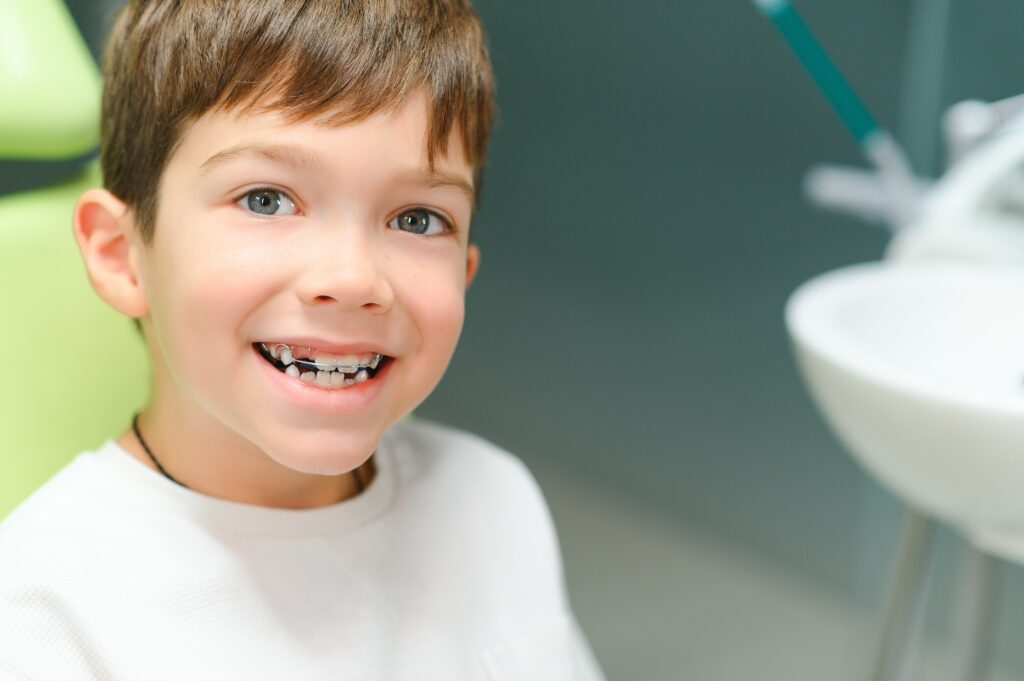
Early intervention orthodontics takes advantage of the skeleton’s natural growth period. By helping your child address misalignments with early orthodontic treatment, you can reduce the length of time they spend in corrective treatment. By the age of 7, your child already has enough permanent teeth for an orthodontist to detect and treat alignment issues. While you can notice some characteristics at home, others are not as obvious to the untrained eye. That’s why the American Association of Orthodontists (AAO) recommends that all children be screened by age 7.
That said, children may require orthodontic treatment after this initial screening. By knowing some telltale signs to look for at home, you may be able to determine whether your child needs to be evaluated early or reevaluated for early intervention orthodontics.
Signs Your Child May Benefit From Early Intervention Orthodontics
1. Pacifier Use and Thumb Sucking
 Prolonged pacifier use contributes to problems with teeth alignment. If your child uses a pacifier beyond toddler years, their front teeth may become misaligned. Extended pacifier use can also lead to an open bite. This is where your child’s top and bottom teeth don’t fully meet when their mouth is closed.
Thumb sucking can cause similar issues. It’s helpful to work with your child to develop healthy habits so they can stop sucking their thumb. If your child continues thumb sucking beyond the age of four or five, they might need early intervention to correct the resulting dental issues.
2. Crowded or Overlapping Teeth
If your child’s permanent teeth grow in crowded or overlapping, they may need early intervention orthodontic care. It’s normal for baby teeth to have spaces between them, but when permanent teeth don’t have enough space to emerge, they may overlap or twist. This creates an undesirable appearance and makes it harder for your child to brush and floss effectively. These oral hygiene challenges can then contribute to gum disease and cavities.
By straightening your child’s teeth with early intervention orthodontics, they will have an easier time keeping their teeth healthy and clean for the rest of their life.
3. Issues With Chewing or Biting
A sign that early intervention treatment may help your child is if they often struggle with pain or discomfort while eating or avoid certain foods due to difficulty biting.
If your child expresses difficulty chewing and biting, this can be a sign of a misaligned bite, also known as a malocclusion. Your child might have an overbite, underbite, or crossbite. If you don’t treat these bite issues, your child’s malocclusion can lead to problems like tooth wear, speech difficulties, and jaw pain.
By treating malocclusions during your child’s natural growth period, you could be saving them from more complex treatments and even oral surgery later on.
4. Losing Baby Teeth Too Early or Late
While it might seem subtle, losing baby teeth too early or too late is a sign that your child might need early treatment. In general, kids start losing their teeth around age 6 and finish losing them around age 12. Losing their teeth too early or too late could affect the alignment of permanent teeth.
Losing teeth too early might cause the surrounding teeth to shift into empty spaces, leading to misaligned or crowded permanent teeth when they come in. If your child’s baby teeth stay in place longer than they should, they can block permanent teeth from surfacing in the right position.
An orthodontist might recommend space maintainers to maintain proper alignment as teeth come in.
5. Mouth Breathing
Another sign your child may need early intervention is if they struggle with mouth breathing. Breathing through the mouth instead of the nose could be a sign that your child’s jaw or palate did not develop properly, potentially indicating a problem with your child’s airway. Early intervention can help your child breathe easier and improve their dental and overall health.
Early Intervention Orthodontics at Orthodontists Associates of WNY
If your child is showing any of the signs mentioned above, they could be candidates for early orthodontic intervention. At Orthodontists Associates of WNY, our goal is to help children achieve confident smiles and functional, comfortable bites through timely treatment.
We emphasize early care because it can shorten the duration of future orthodontic work and make maintaining oral hygiene more manageable. We’ve seen time and time again that a healthier smile at an early age supports better overall health. At our practice, we’re committed to laying that healthy foundation for your child.
Book a Free Consultation for Early Intervention Orthodontics
If your child has shown any of these early signs of orthodontic issues, they’ll likely benefit from early intervention orthodontics. Regardless, you should follow the AAO’s recommendations and have your child undergo screening by age 7. If you’re ready to screen your child and determine if early intervention is appropriate, book a free consultation with the Orthodontists Associates of WNY at an office near you. Our offices are located in Buffalo, Hamburg, Olean, Lancaster, Niagara Falls, Orchard Park, Dunkirk, and East Aurora.