
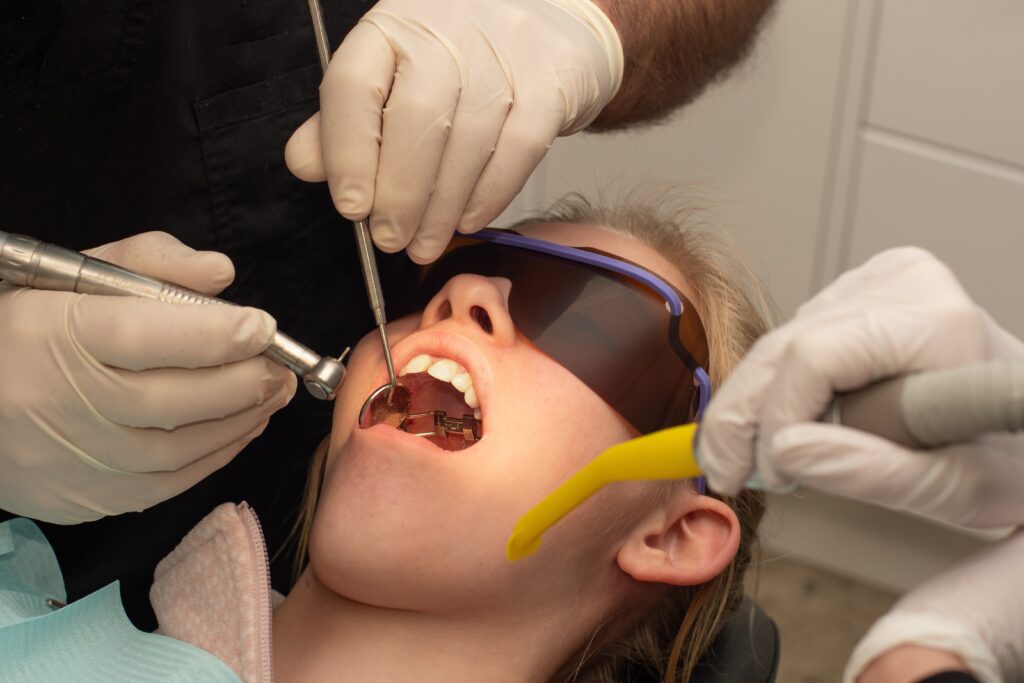
Sometimes, we recommend palate expanders as an early orthodontic intervention to take advantage of children’s natural growth period. As kids develop, their skeletal structure grows and shifts. During this period, their bones are more moldable. If your child has a misaligned bite, their orthodontist might recommend a palate expander during this timeframe to correct the upper jaw as it develops. With such a device involved, it’s only natural to wonder: Do expanders hurt?
While expanders can cause a little bit of pressure or initial discomfort, particularly in the first few days, they shouldn’t cause pain. And any pressure should ease quickly after your orthodontist places the expander and after you adjust it daily.
How Palate Expanders Work
 Palate expanders, also called palatal expanders, are used when a patient’s upper jaw, medically known as the maxillary jaw, is too narrow. Crowded or overlapping teeth cause misalignments, medically known as a malocclusion.
Because palate expanders change the bone structure, they’re a kind of skeletal expander. Dental expanders, on the other hand, push the teeth themselves into a wider position. There are other kinds of skeletal and dental expanders, but here we are focusing on palate expanders in particular.
To determine the best approach for a malocclusion, we first assess whether the misalignment stems from the teeth or the jaw. If the position of the teeth themselves is the root cause, we can use braces to correct it. If the jaw is too narrow, we use a palate expander to widen it. In some cases, we may use both.
Expanding the upper jaw, which is made up of two halves that haven’t yet fused in children, creates more space for crowded teeth. This process can also improve airflow by reshaping the nasal cavity, leading to better breathing.
One of our orthodontists will fit an expander to the roof of the patient’s mouth, separating the two halves of the jawbone. At our office, we typically glue palatal expanders onto adult molars, so most expanders are not removable. It actually only takes three to six weeks to expand the palate, but your orthodontist will keep an expander in your mouth for a longer period, usually around 12 months. At this point, the expander acts like a retainer, preserving the change in structure.
Do Expanders Hurt?
Expanders may be an important tool for realigning your child’s bite. But will palate expanders hurt? These orthodontic devices should not hurt. However, initial discomfort after having the palate expander placed is normal.
In the first days of having an expander, your child might feel uncomfortable with the pressure it puts on their teeth and jaw. To relieve this, they can take a Tylenol, Advil, or another over-the-counter pain reliever.
During the period when your child is wearing the palate expander, you’ll need to adjust it for them by turning a screw at the roof of their mouth. This gently adds more pressure to continue the expansion process. When this happens, it will not be painful, but patients might experience a sensation of increased pressure on their teeth and the roof of their mouth for a short time afterward.
While some patients worry that palate expanders might hurt, these devices often relieve discomfort over time by addressing crowding, impacted teeth, and nasal breathing problems. They can even help address sleep apnea in cases where a narrow palate causes an airway obstruction.
And by taking advantage of a child’s moldable bone structure through early intervention, expanders can prevent the need for longer, more invasive treatment in adulthood. Once your bone structure fully develops, palate expansion may require oral surgery. In the end, palate expanders can help prevent your child from experiencing more pain and discomfort down the line.
Book a FREE Palate Expander Consultation Today!
Orthodontists treat certain malocclusions with palate expanders. If your provider recommends a palate expander for your child, rest assured that it shouldn’t hurt. While it may take some getting used to, palate expanders shouldn’t be painful. Early intervention with a palate expander can even save your child from more painful interventions later on.
To learn more about how palate expanders can help your child, schedule a free consultation with one of our highly skilled orthodontists at our offices across Western New York. We are located in Buffalo, Hamburg, Lancaster, Olean, Dunkirk, East Aurora, Orchard Park, and Niagara Falls. We look forward to seeing you at an office near you!