If you experience malocclusion—the technical term for a misaligned bite—you may need surgery to correct it. But there’s no need to worry: As severe as the word “surgery” can sound, we aren’t talking about a majorly invasive procedure. Surgical solutions for malocclusion are similar to resetting a broken bone in your arm or leg. A surgeon fits a fractured shin, for instance, with a cast in order to eliminate pain and eventually restore proper function to the bone. The difference with regard to malocclusion surgery is that the bones in question aren’t in your arms or legs, but rather the ones in your jaw involved in chewing, biting, and smiling.
What Is Malocclusion?
 Malocclusion is quite common worldwide, and many cases don’t require treatment. Some people, however, experience unpleasant malocclusion symptoms. Typical symptoms of malocclusion include:
- Abnormal facial development
- Incorrect teeth alignment
- Mouth breathing
- Eating difficulties
- Speech impediments
Malocclusion is usually hereditary. However, you may also experience malocclusion as a result of:
- Childhood thumb sucking
- Crooked or crowded teeth
- Improperly calibrated orthodontic appliances
- Jaw asymmetry
- Missing teeth
- Jaw tumors
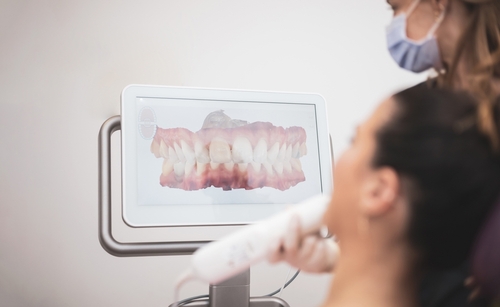
To diagnose your precise malocclusion issue, your provider at Orthodontists Associates of Western New York will take wraparound i-CAT scans and CBCT digital images of your head and make plaster molds of your mouth. The treatment program your orthodontist suggests will depend on what, exactly, the images show, as well as your symptoms and their severity.
Many different malocclusion-related conditions exist, including:
- Crossbite: When your lower front teeth sit in front of your upper front teeth, or your upper back teeth sit inside your lower back teeth.
- Crowding: When there isn’t enough room for all your teeth to fit in your mouth without clustering or twisting around each other.
- Open Bite: When your upper front teeth do not meet your lower front teeth.
- Overbite: When your upper teeth cover too much of the lower teeth when biting down.
- Overjet: When your front teeth stick out over your bottom teeth (“buck teeth”).
- Underbite: When your bottom front teeth stick out beyond your upper front teeth.
Determining the type of malocclusion you’re experiencing helps your orthodontist plan an appropriate treatment. And depending on your particular symptoms and the severity of your condition, malocclusion may require a surgical solution.
Types of Surgical Solutions for Malocclusion
Surgical treatment for malocclusion falls under the category of orthognathic surgery, or jaw surgery. Jaw problems can cause the bite issues that characterize malocclusion. Orthognathic surgical techniques vary, and include:
- Bimaxillary surgery: Your upper and lower jaws are both worked on.
- Genioplasty: Your chin is positioned and shaped to improve facial feature balance.
- Mandibular osteotomy: Your lower jaw is cut and repositioned to correct misalignments like underbite or overbite.
- Maxillary osteotomy: Your upper jaw is cut and repositioned to correct conditions like open bite, crossbite, or facial asymmetry.
You may also require surgical solutions for other conditions that can cause, or exist alongside, malocclusion, such as:
- Broken jaws
- Cleft lip or palate
- Jaw reconstruction following trauma
- Jaw tumors
- Sleep apnea
- Temporomandibular joint disorder (TMD)
Orthognathic surgery can be rather involved and requires a lot of healing time. But it’s about 94% effective. Most patients agree that surgery is worth the resulting improvement in chewing, breathing, sleeping, and smiling.
What Are Some Non-Surgical Solutions for Malocclusion?
There are also non-surgical ways to address less severe forms of malocclusion. These include:
- Appliances: Certain orthodontic devices help influence jaw growth and correct misalignment.
- Braces: Both traditional metal braces and clear aligners, such as Invisalign®, can correct malocclusion.
- Expanders: Palatal expanders widen your upper jaw, improving upper and lower jaw alignment.
- Extractions: Particularly in the case of crowding, some teeth may need to be removed to correct malocclusion.
The above treatments work best when malocclusion is diagnosed and addressed early—that is, in young children. Adult malocclusion patients, however, are more likely to require surgical intervention.
Let Orthodontists Associates of Western New York Help With Your Malocclusion Issues!
At Orthodontists Associates of Western New York, we know that the concept of a surgical solution for malocclusion can be daunting. That’s why we work hard to make the process as comfortable, transparent, and simple as possible.
Contact us at one of our 7 locations for a free consultation. Let us take care of your malocclusion issues and give you the smile you deserve.
