Sharks have evolved over hundreds of millions of years. Their oral anatomy is highly effective, as it’s built around the ability to bite and process food efficiently—all day long. Sharks don’t have to worry about bite problems. People, however, evolved differently. Our dental structure is designed for a more diverse diet. We have molars to grind vegetables, incisors to tear meat, etc. And amid all that continuous diversity of chewing, grinding, and biting, we’ve come to develop a number of common jaw and teeth issues. Fortunately, a skilled orthodontist can often fix jaw problems with dentofacial orthopedic devices. These devices help guide jaw development to promote healthier function and facial balance.
What Is Dentofacial Orthopedics?
 Dentofacial orthopedics is a sub-discipline of orthodontics that addresses issues related to the upper and lower jaws.
Treating jaw issues in younger patients is ideal because their developing joints respond better to dentofacial orthopedic devices. Generally speaking, girls’ jaws stop growing around age 16, while boys’ stop around age 18. After that point, a patient may be less likely to respond to dentofacial orthopedics. Instead, they may have to turn to surgical orthodontics to correct jaw issues. The American Association of Orthodontists recommends that children be seen for orthodontic issues by age 7 for the best outcomes.
Common Dentofacial Orthopedic Issues
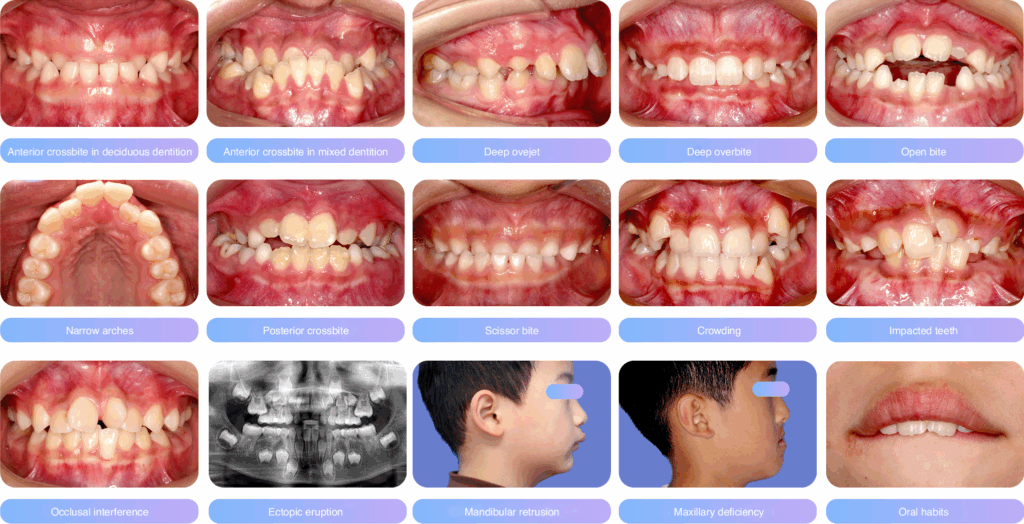
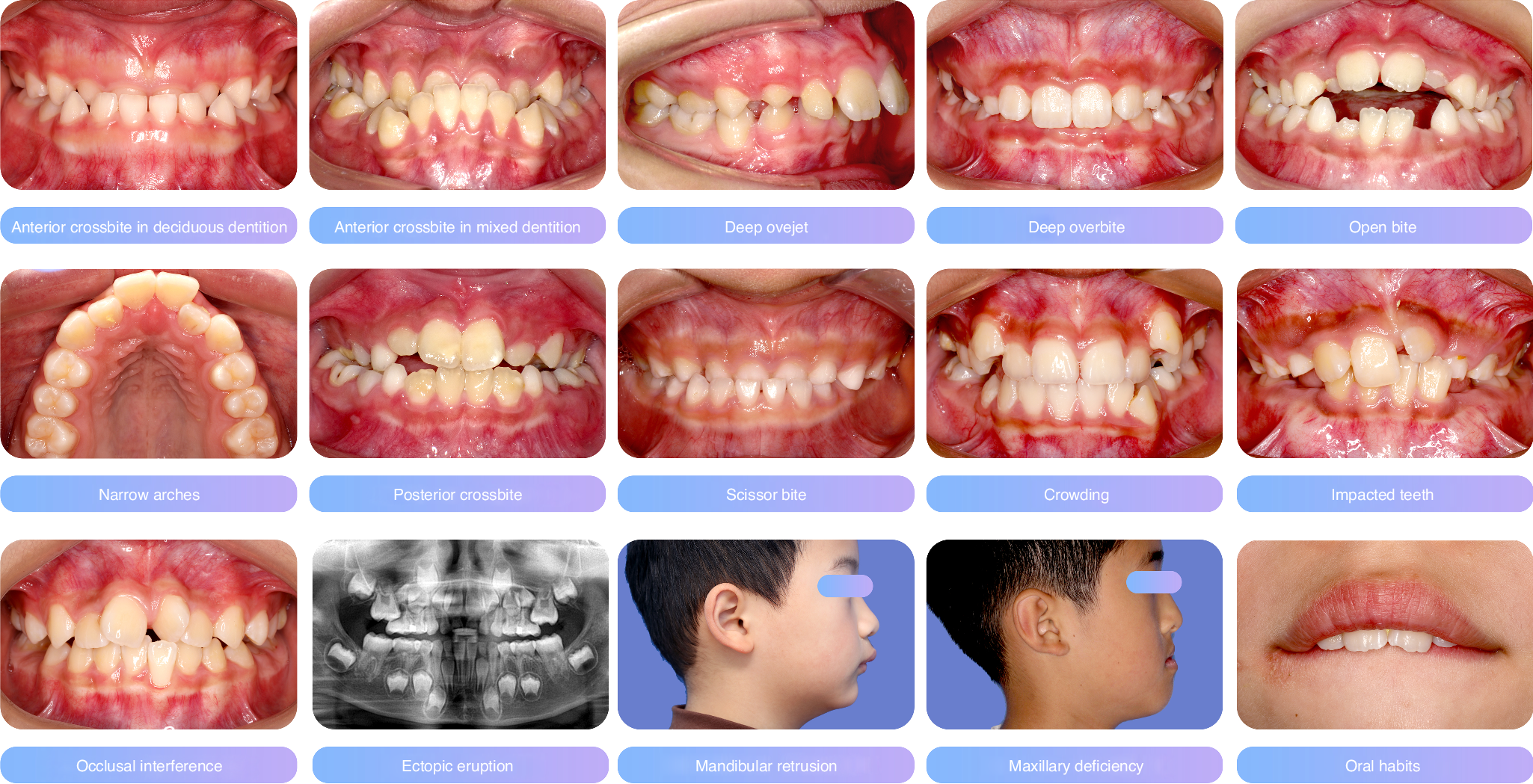
One particularly common jaw issue is malocclusion. Also known as a misaligned bite, malocclusion affects 56% of people worldwide. The cause of malocclusion is often genetic, but it can also result from childhood habits such as thumbsucking.
Types of malocclusion include:
- Crossbite: Upper teeth sit inside lower teeth when the mouth is closed
- Open bite: Upper teeth don’t touch lower front teeth when the mouth is closed
- Overbite: Upper teeth overlap lower teeth to an excessive extent
- Overjet: “Buck teeth”—upper front teeth jut out excessively
- Underbite: Lower front teeth jut out beyond upper front teeth
Sometimes, a minor bite problem doesn’t need treatment if it doesn’t cause pain or trouble chewing. But if you have pain, trouble eating, or changes in your facial appearance, it’s a good idea to see an orthodontist who can help treat the issue and improve your comfort.
Types of Dentofacial Orthopedic Devices
To fix a malocclusion issue, orthodontists use a variety of dentofacial orthopedic devices, such as:
- Activators: Move the upper or lower jaw forward
- Blocks: Use a patient’s bite force to gently shift teeth
- Lower jaw expanders: Slowly move crowded teeth apart
- Orthodontic headgear: Apply therapeutic force to the jaw and head via a wraparound appliance
- Functional appliances (e.g., Herbst device): Guide jaw growth by repositioning the lower jaw forward
- Palatal expanders: Gradually broaden the cartilage of the maxilla (upper jaw)
An orthodontist uses modern imaging and moulding techniques to determine your course of treatment. After we address your jaw problems, we can discuss traditional orthodontic services (such as braces) to straighten your teeth.
Benefits of Dentofacial Orthopedic Devices
Prior to treatment, you may experience jaw pain, clicking, popping, a weak bite, and other distressing symptoms. Fortunately, dentofacial orthopedic devices address these symptoms. They have other benefits as well, such as:
- Addressing conditions like temporomandibular disorder
- Creating space for crowded teeth
- Improving bite alignment
- Encouraging proper jaw growth
- Treating jaw issues comfortably
- Making additional orthodontic treatment simpler
If we catch a malocclusion problem early, treatment may take up to a year. Once your orthodontist fixes the bite issue, you’ll likely feel much better!
Let Us Help You Resolve Your Dentofacial Concerns
Our providers at Orthodontists Associates of Western New York understand how significantly jaw issues can affect your quality of life. If you’re dealing with discomfort, difficulty functioning, or visible dental concerns, it’s worth seeking expert orthodontic care.
Contact us at one of our 7 Western New York locations for a free consultation. We can’t give you shark-like bite strength, but we can help you feel your best and smile your brightest!
