

An overbite is a type of malocclusion, which literally means “bad bite.” It develops when the upper teeth sit too far in front of the lower teeth. A little overlap is typical and expected, but when it becomes pronounced, it may start to create problems and live up to its name as a bad bite!
You may not love the way your overbite looks, but it can affect more than just your appearance. An imbalanced bite can impact your comfort, function, and overall oral health. That’s why it’s important to address it with orthodontics sooner rather than later. Early intervention makes it easier to correct orthodontic issues and reduces the likelihood of needing more complex treatments, such as surgery, later in life.
At Orthodontists Associates of WNY, we often help patients struggling with overbites find the best way to correct their smiles!
Why Should You Correct an Overbite?
How bad is an overbite, really? If left untreated, an overbite can cause a range of issues beyond appearance. For instance, it can contribute to tooth wear due to your upper and lower teeth grinding unevenly.
Your bite problems may also lead to jaw pain and frequent headaches, especially when the temporomandibular joint (TMJ) is overworked and strained. Plus, you might experience difficulties chewing and biting.
All of these issues stem from malocclusion, which means we can address the root cause by correcting your overbite. By improving your bite alignment, we help reduce many of its negative effects, including tooth wear, TMJ pain, headaches, and difficulty chewing.
Types of Overbites
Before we explore the best ways to correct overbites, we should unpack the two types of overbites and how they influence treatment.
There are two main types of overbites: dental and skeletal.
A dental overbite is caused by the placement of the teeth. This is different from an overjet, which occurs when the teeth visibly protrude forward. The key difference is this: an overjet is based on the angle of the teeth, while a dental overbite is based on the vertical position of the teeth. It is possible to have both an overbite and an overjet.
Another type of overbite is a skeletal overbite, characterized by the position of the jaw. More moderate or severe overbites are commonly caused by the lower jaw being too small or set too far back.
In general, mild overbites are often caused by tooth positioning and can typically be corrected with braces. More severe overbites may involve differences in jaw development and require additional treatment steps. Some patients may even have a combination of both dental and skeletal factors.
Because every overbite is unique, our office creates personalized treatment plans to address both dental and skeletal concerns effectively.
Your Options for Overbite Correction
Wondering what fixing a bite might look like in your situation?
We offer a wide array of overbite correction solutions at our practice. For many patients, we can address overbites using various devices to adjust tooth and/or jaw position.
Braces
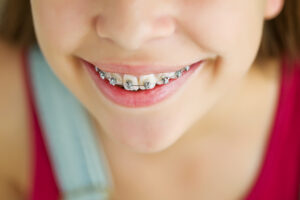
These brackets and wires gradually apply pressure to the teeth to correct overbites. They are available in traditional metal and clear ceramic, and are a common option for correcting dental overbites. If you have a skeletal overbite, you’ll need to be treated with other appliances to reposition the jaw.
Clear Aligners
For a more discreet option to correct your bite, you might be surprised to learn that Invisalign® clear aligners could address your bite issues. They are a series of plastic trays that apply controlled pressure to slowly reposition the teeth. This barely visible solution is most effective for mild dental overbites.
Other Orthodontic Appliances
We may recommend additional devices based on your specific bite issues. For instance, we might use temporary anchorage devices (TADs) to help control tooth movements. TADs act like tiny anchors in the bone that let us move specific teeth exactly where needed—like pulling back the upper front teeth or settling the back teeth down—to help fix your overbite.
For pronounced overbites, we may recommend the Herbst appliance. This device helps guide jaw growth to correct alignment in growing patients. If your upper jaw is narrow, an upper palatal expander could help create space for proper alignment, helping your bite settle evenly.
In the most severe cases of overbite treated later in life, we may need to surgically reposition the lower jaw forward.
Fortunately, with early intervention, we’re able to work with your child’s natural growth patterns to improve their bite. We recommend that you bring your child in for an early dental screening by age 7 to learn if orthodontic treatment may be needed now or in the future—and to determine the best time to begin.
At Orthodontists Associates of WNY, we want you to understand all your treatment options. That’s why we don’t charge for any visits until treatment begins. It costs nothing to learn about the benefits of overbite correction!
Book a Free Consultation
An overbite might seem like just a cosmetic issue, but it can also contribute to tooth wear, jaw pain, and other bite problems over time. Some overbites are caused by tooth position, others by jaw development, and many are a mix of both.
The encouraging part is that we can correct most overbites with braces, expanders, or other orthodontic appliances. Surgery is only considered in more severe cases. And when treatment begins early, we’re often able to guide a child’s growth in a way that helps prevent more complicated procedures later.
If you’re wondering whether treatment is right for you or your child, we’re happy to help. With 7 locations across Western New York, Orthodontic Associates of WNY makes it easy to get answers. Schedule a free consultation so we can take a closer look!